If you own a home in Metro Atlanta, homeowner’s insurance is one of your most important financial protections. It is also one of those expenses that many homeowners pay each year without fully understanding what drives the cost or how to make sure they are getting real value for what they spend.
Home insurance rates in Metro Atlanta are shaped by a combination of factors, some tied to your specific property and others connected to broader market conditions across Georgia. The more you understand what goes into your premium, the better positioned you are to make smart decisions about your coverage.
At Sonturk Insurance Agency, we work with homeowners across Metro Atlanta to find coverage that genuinely protects them at a price that makes sense. In this guide, we walk through what actually affects your rate and what you can realistically do about it.
Why Metro Atlanta Home Insurance Rates Have Been Rising
If your renewal premium has gone up in recent years, you are not alone. Home insurance rates across Georgia and the broader Southeast have been increasing, and several factors are driving it.
Severe Weather Patterns
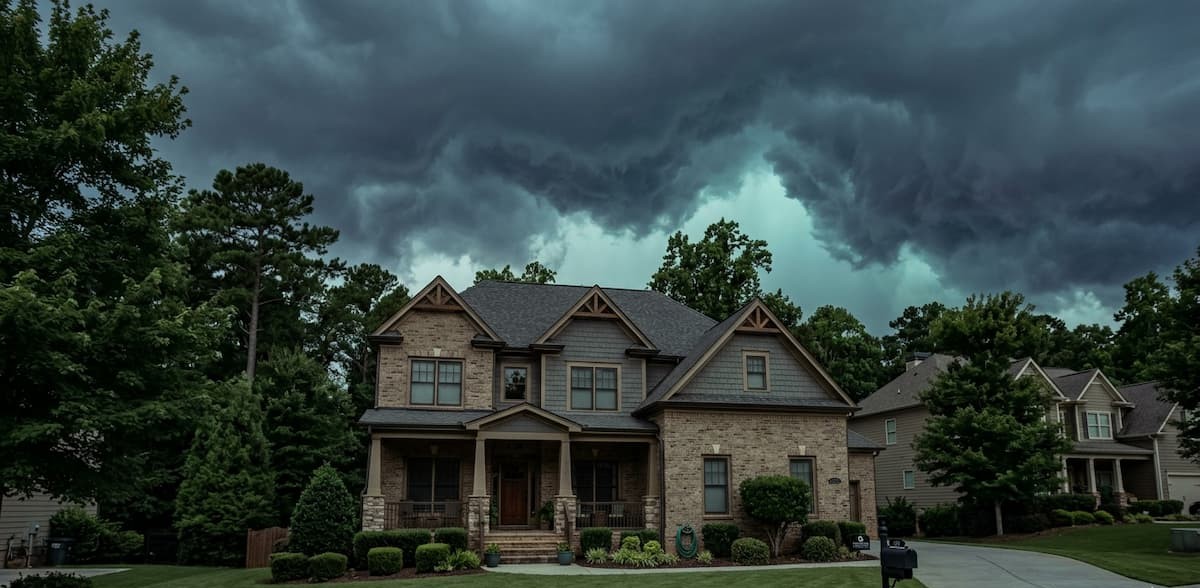
Georgia sees its share of significant weather events, including thunderstorms, hail, tornadoes, and storm systems that push inland from the Gulf. When major weather events generate widespread claims across a region, insurers respond by adjusting rates across the entire market. Even if your home was not damaged in a recent event, your rates can reflect what happened in the broader area.
Rising Construction Costs
The cost of labor and materials to repair or rebuild homes has increased substantially in recent years. Since homeowner’s insurance is designed to cover the cost of rebuilding your home, carriers must price policies to reflect what rebuilding actually costs today. If your coverage amount has not been updated recently, there is a real chance you are underinsured.
Reinsurance Market Changes
This factor is less visible to homeowners but has a real impact on premiums. Insurance companies purchase their own insurance, called reinsurance, to help manage large-scale losses across their portfolio. When reinsurance costs rise globally, those costs work their way into individual homeowner premiums across the country.
Property-Specific Factors That Affect Your Rate
Beyond broader market conditions, the specific characteristics of your home play a significant role in what you pay.
Your Home’s Age and Condition
Older homes often carry higher premiums because they are more likely to have outdated electrical, plumbing, or roofing systems that increase the probability of a claim. A home with a recently replaced roof, updated wiring, and modern plumbing will generally receive more favorable rates than a similar older home with aging systems.
Your Roof
The age, material, and condition of your roof is one of the most significant individual factors in your home insurance premium. Some carriers in Georgia will not renew policies on homes with roofs over a certain age. Others offer meaningful discounts for impact-resistant shingles, which perform better in hail events than standard materials. If your roof is aging, it is worth discussing the implications with your agent well before your next renewal.
Your Home’s Location Within Metro Atlanta
Where your home sits within the Metro Atlanta area matters. Proximity to a fire station and fire hydrant can lower your rate. Homes in flood-prone areas may require separate flood insurance, which is not included in a standard homeowner’s policy. Local crime rates and neighborhood claims history also factor into your base premium.
Your Coverage Limits and Deductibles
The amount of coverage you carry directly affects your premium. Dwelling coverage should reflect the cost to rebuild your home, which is often quite different from its current market value. Choosing a higher deductible can reduce your premium, but only if you are confident you could cover that amount out of pocket if a claim were to occur.
Your Home’s Size and Special Features
Larger homes cost more to rebuild and therefore carry higher premiums. Homes with pools, trampolines, or certain dog breeds may also carry higher premiums or require additional liability coverage due to the increased risk of injury to others.
Personal Factors That Affect Your Home Insurance Rate
In addition to property characteristics, several factors related to you as the policyholder influence what you pay.
Your Claims History
If you have filed home insurance claims in recent years, your rates will likely reflect that. Some insurers also consider claims filed on a property by previous owners, particularly for water damage or structural issues. This information is tracked through the CLUE database, which insurers can access when pricing a new policy.
Your Credit Score
Like auto insurance, homeowner’s insurance in Georgia can be priced using a credit-based insurance score. Homeowners with stronger credit tend to receive more favorable rates. This is one area where improving your overall financial health has a direct benefit on your insurance costs.
Whether You Bundle Your Policies
Combining your home and auto insurance with the same carrier is one of the most consistent ways to reduce what you pay on both policies. Most carriers offer meaningful multi-policy discounts, and many Metro Atlanta homeowners leave real savings on the table by keeping their policies with separate companies.
Your Coverage History
Maintaining continuous coverage without gaps signals lower risk to insurers. A homeowner with a long, uninterrupted coverage history typically fares better at renewal than someone with recent gaps in their record.
How to Get Better Value on Your Metro Atlanta Home Insurance
Understanding what drives your rate is useful. Knowing what you can actually do about it is even more useful. Here are practical steps that make a real difference.
Review Your Dwelling Coverage Amount Regularly
Construction costs have changed significantly in recent years. If your coverage was set several years ago and has not been updated, you may be underinsured without realizing it. An insurance professional can help you calculate a current replacement cost estimate for your specific home.
Ask About Discounts
Many discounts are not automatically applied. You may qualify for savings based on home security systems, smoke detectors, deadbolt locks, a new roof, being claims-free for multiple years, or being a long-term customer with the same carrier. Always ask what discounts are available before finalizing any policy.
Compare Quotes When Your Policy Renews
The home insurance market is competitive, and rates vary meaningfully between carriers. If you have been with the same company for several years and your premium has been climbing, it is worth comparing your options. An independent agent can do this efficiently on your behalf.
Address Deferred Maintenance
Issues like an aging roof, older electrical panels, or deteriorating plumbing can raise your rate or make it harder to find coverage at all. Addressing these proactively can improve both your insurability and your premium going forward.
Why Independent Agents Are Valuable for Home Insurance in Metro Atlanta
Independent agents work with multiple carriers rather than being tied to a single company’s products. This matters because no single carrier offers the best rate for every home profile in Metro Atlanta. The same home can receive very different quotes from different companies, and most homeowners would never know this if they only checked one source.
At Sonturk Insurance Agency, we compare options across multiple top-rated carriers to find the combination of price and protection that makes the most sense for your specific home and situation. We have been doing this for Metro Atlanta homeowners since 2010, and we know what questions to ask.
Frequently Asked Questions
Does my Metro Atlanta home insurance cover flood damage?
No. Standard homeowner’s insurance does not cover flood damage. If your property is in a flood-prone area, you will need a separate flood insurance policy, typically through the National Flood Insurance Program or a private flood carrier. This is worth discussing with your agent even if flooding seems unlikely in your area.
How is my home’s replacement cost different from its market value?
Market value reflects what someone would pay for your home, including the land. Replacement cost reflects what it would cost to rebuild the structure from the ground up using today’s labor and material costs. These numbers can differ significantly, and your dwelling coverage should be based on replacement cost.
What is a credit-based insurance score and how does it affect my home insurance?
A credit-based insurance score is a metric that insurers use to predict the likelihood of future claims. It is calculated differently from your standard credit score but uses similar underlying financial data. A higher score generally results in more favorable rates.
If I work from home, does my homeowner’s insurance cover my business equipment?
Business equipment used for work is often excluded or limited under a standard homeowner’s policy. If you work from home regularly, ask about a business property endorsement or a separate commercial policy to fill this gap. This is increasingly relevant as more Metro Atlanta professionals work remotely.
How often should I review my home insurance?
At least once a year at renewal time, and any time you make significant improvements to your home, add a pool or other structure, or experience a major change in your financial situation. Keeping your coverage current is one of the most important things you can do as a homeowner.
How do I get a home insurance quote in Metro Atlanta?
Contact Sonturk Insurance Agency at (678) 919-8119 or visit sonturkinsurance.com. We will gather information about your home and your current coverage, then compare options across multiple carriers to find the best fit for your specific situation.