
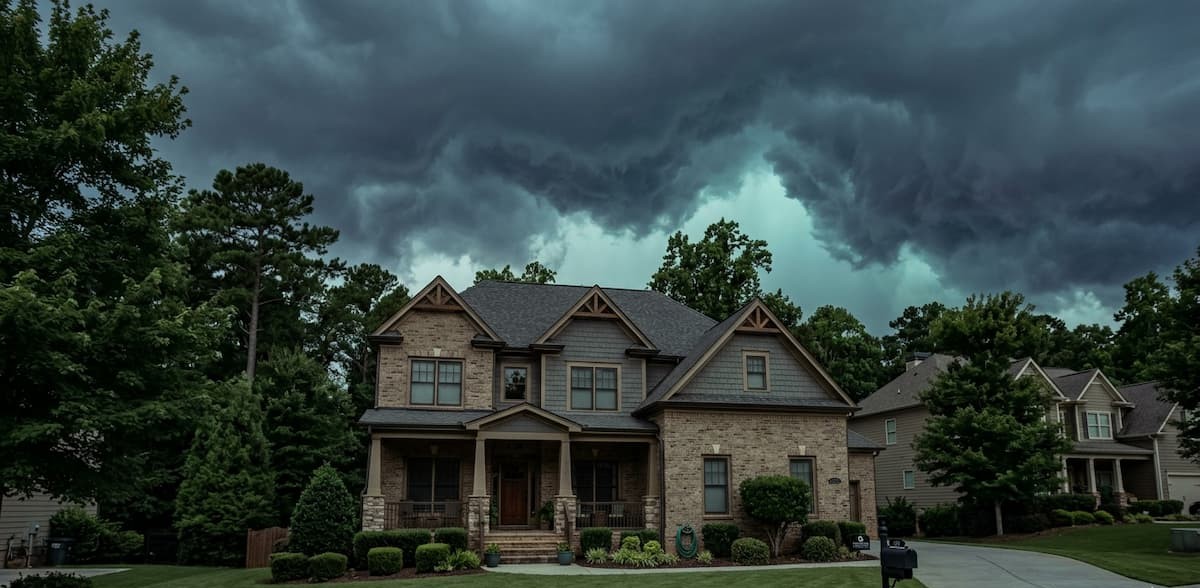
Many Metro Atlanta homeowners assume their coverage is solid. They have a policy, they pay their premium, and they move on. Hurricane Helene caused significant damage across Georgia in 2024. Afterward, a pattern emerged: homeowners who had not reviewed their coverage in years found gaps they never knew existed. As another storm season approaches, now is the right time to review what your policy actually covers. It’s also worth finding where exposure might be quietly hiding.
The Rebuild Cost Gap Most Atlanta Homeowners Do Not Know About
Your home insurance policy pays based on your dwelling coverage limit. That limit may not match what it would actually cost to rebuild your home today. Since 2020, construction costs in Metro Atlanta have increased by more than 30%. Lumber, roofing materials, concrete, and skilled labor have all become more expensive. If you wrote or last reviewed your policy in 2020 or 2021, those rebuild estimates are now outdated. If your dwelling coverage hasn’t changed since then, you may be underinsured by a meaningful margin.
Here’s the practical consequence: if a storm destroys or damages your home, your insurer pays up to your coverage limit. If the actual cost to rebuild exceeds that limit, the difference is your responsibility. If you insured your home for $300,000 and rebuild costs rose 30%, that potential gap is $90,000 or more. Extended replacement cost coverage specifically protects against this scenario. It provides a buffer above your dwelling limit, typically 20 to 50%. If you are not sure whether you have it, ask your agent at your next review.
What Hurricane Helene Taught Georgia Homeowners
Hurricane Helene made landfall as a powerful storm in September 2024. It caused damage across a much broader area of Georgia than many homeowners anticipated. The storm hit South Georgia and the Augusta area hard. Metro Atlanta also received significant wind damage and heavy flooding from its remnants. Preliminary estimates suggested Georgia sustained $2 to $4 billion in insured losses.
The storm’s aftermath accelerated a 12% rate increase for Georgia homeowners insurance in the 12 months that followed. For homeowners who filed claims, the experience revealed some important realities. A standard homeowners policy does not cover flood damage from storm-driven water. Hurricane and windstorm deductibles are often higher and separate from a standard deductible. And coverage limits that appeared adequate on paper were not sufficient for full rebuilds at current construction costs. These are outcomes from a storm that happened less than two years ago. They are not hypothetical risks.
The Flood Risk Metro Atlanta Homeowners Often Underestimate
Many Metro Atlanta homeowners assume flood insurance is only necessary for coastal Georgia or properties near the Savannah coast. That assumption is expensive and inaccurate. The Chattahoochee River system runs directly through the metro area, and its tributaries extend into Cobb, Fulton, and DeKalb counties. Rapid development has increased impervious surfaces, pavement and rooftops that shed water instead of absorbing it. Combined with intense rainfall events, this creates a real flash flood risk across much of the metro. That risk extends to areas that don’t appear on standard high-risk flood zone maps.
Standard homeowners insurance does not cover flood damage. Flood coverage requires a separate policy, either through the National Flood Insurance Program (NFIP) or a private carrier. Mortgage lenders require flood insurance for properties in FEMA-designated Zone AE. But properties just outside those high-risk designations flood too, and their owners typically have no coverage when it happens. Research from the First Street Foundation found something striking. More than 18,000 properties in the Atlanta area face significant flood risk in the coming decades, based on climate projections. The average NFIP claim payout is around $52,000. Without a policy, that cost is entirely out of pocket.
Storm Season Risks Specific to Metro Atlanta
Metro Atlanta sits in what meteorologists call Dixie Alley. This Southeast corridor sees severe convective storms, tornadoes, and large hail events regularly. Severe convective storms have surpassed hurricanes as the leading cause of insured property losses in the Southeast in recent years. Cobb, Gwinnett, Cherokee, and Forsyth counties see damaging hail events almost every spring. Metro Atlanta’s hail exposure record reflects that pattern clearly.
Standard homeowners policies cover wind and hail damage. However, the windstorm deductible that applies to those claims works differently. It’s often a percentage of your dwelling coverage limit rather than a flat dollar amount. If you insure a home for $350,000 with a 2% wind deductible, you pay the first $7,000 before coverage applies. On a $500,000 home, that is $10,000. Many homeowners discover this calculation only after they have filed a claim. Understanding your deductibles before storm season is considerably better than learning about them during it.
Your Home Insurance Storm Season Checklist; Five Things to Check on Your Home Insurance Policy Right Now
First: Verify that your dwelling coverage limit reflects current rebuild costs. Base that number on today’s rebuild cost, not on market value or your original purchase price.
Second: Check your deductibles. Your standard deductible and your windstorm or hail deductible are often different amounts, and insurers express them differently. Know both numbers before storm season.
Third: Determine whether you have flood coverage. Standard homeowners policies exclude it entirely. Do you live near the Chattahoochee or its tributaries, or in a low-lying area of Cobb, Fulton, or DeKalb counties? A separate flood policy is worth serious consideration.
Fourth: Ask your agent about extended replacement cost. This endorsement provides a percentage buffer above your dwelling limit if rebuilding costs exceed your stated coverage. That’s a real risk, given how much construction costs have risen since 2020.
Fifth: Review your personal property and liability limits. Atlanta’s higher cost of living means replacing belongings at current prices often exceeds basic personal property limits. And liability coverage of $100,000 or $300,000 protects you if someone gets hurt on your property.
If it’s been two or three years since you reviewed your policy, now is the time to start. A conversation with Sonturk Insurance Agency is the right starting point. We work with multiple top rated carriers to find coverage that fits your home and budget.
Frequently Asked Questions
Does standard homeowners insurance cover flood damage?
No. Flood damage is specifically excluded from standard homeowners insurance policies. It requires a separate flood insurance policy through the National Flood Insurance Program (NFIP) or a private carrier. Even properties outside designated high-risk flood zones can and do flood, and without a separate policy, that damage comes entirely out of pocket.
What is the average cost of homeowners insurance in Metro Atlanta?
Estimates vary by source and coverage level, but Atlanta homeowners generally pay above the Georgia state average due to higher rebuild costs, storm exposure, and urban density. Published averages for Atlanta range from approximately $2,640 to over $3,400 per year depending on coverage limits. The most accurate number for your home requires a quote based on your specific property.
What is a wind or hail deductible and how is it different from my regular deductible?
Many Georgia homeowners policies carry a separate windstorm or hail deductible that applies specifically to storm-related claims. It is often expressed as a percentage of your dwelling coverage limit (for example, 2%) rather than a flat dollar amount. On a home insured for $350,000, a 2% wind deductible means you pay the first $7,000 of a wind claim before your insurer contributes.
Do I need flood insurance if I live in Metro Atlanta?
Mortgage lenders require it for properties in FEMA-designated high-risk flood zones (Zone AE). Even if your lender does not require it, properties near the Chattahoochee River system and in low-lying areas of Cobb, Fulton, and DeKalb counties carry real flood risk that a standard homeowners policy does not cover. A separate flood policy is worth evaluating.
What is extended replacement cost coverage and do I need it?
This endorsement provides additional coverage above your stated dwelling limit, typically 20 to 50% more, if the actual cost to rebuild your home exceeds your policy limit. Given the increase in construction costs since 2020, this coverage is a practical protection against the underinsurance gap many Metro Atlanta homeowners currently face without realizing it.
How do I know if my home is underinsured?
The clearest indicator is that your dwelling coverage limit has not been updated in two or more years. A qualified insurance agent can run a replacement cost estimate for your home based on current construction costs in your area. Sonturk Insurance Agency can do this as part of a no-cost coverage review. If your current limit is significantly below that estimate, adjusting it before a loss is the right time to act.
📞 Ready to Get Started?
Storm season is the wrong time to find out you were underinsured. Sonturk Insurance Agency helps homeowners review their coverage and get the right protection before they need to use it.
👉 sonturkinsurance.com | (678) 919-8119 | contact@sonturkinsurance.com | Get Free Quote